Cash Advance Now - PayDaySay
PayDaySayFinance
4.6775.00 Reviews
- Version
- 1.26
- Installs
- 100.00K
- Age Rating
- Everyone
Screenshots
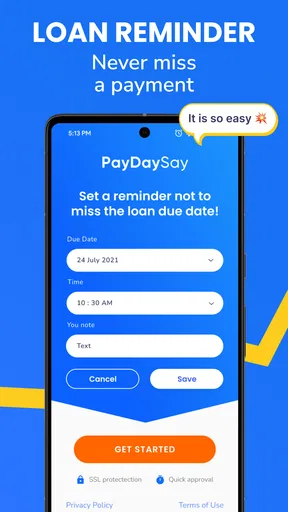
Our Review of Cash Advance Now - PayDaySay
 Analysis by Appyee
When an unexpected expense lands between paydays, the appeal of Cash Advance Now - PayDaySay is easy to understand. It is a finance app from PayDaySay built around requesting a small cash advance through a phone rather than searching for a traditional bank product. I found the experience most useful when treated as a short-term planning tool, not as extra income. That distinction matters: the app can help bridge a timing problem, but it does not remove the responsibility to repay what you borrow.
The app is free to install and is suitable for Everyone, which makes its presentation approachable. It has passed the early trial stage with more than a hundred thousand installs, and its 4.6 average from roughly sixteen thousand ratings suggests that many users find the basic idea useful. Still, a finance app deserves more careful attention than a casual utility. My recommendation is to examine every screen, read each repayment detail, and decide whether the advance solves a genuine short gap before submitting anything.
How the everyday borrowing workflow feels
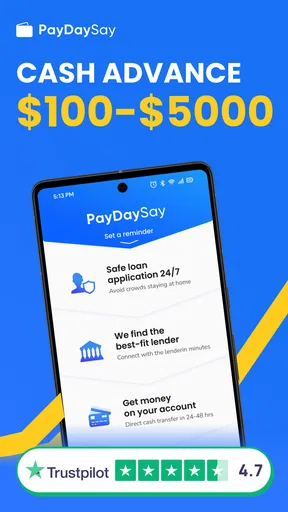
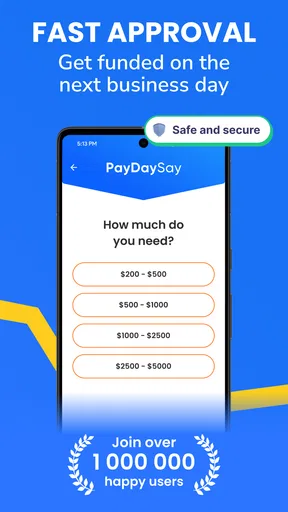
The starting point is straightforward. You open the app, review the available borrowing path, and follow the prompts for a payday cash advance. The store summary focuses on an extra two hundred, so the product is clearly aimed at modest, immediate needs rather than large personal loans. That makes it a better match for a bill-timing problem than for debt consolidation, a major purchase, or a long-term financial plan.
A realistic example would be a utility payment arriving just before your salary clears. In that situation, I would first write down the bill amount, the date my income is expected, and the amount I can comfortably repay. I would then use PayDaySay to check whether the requested advance fits that narrow gap. The important habit is to make the repayment date part of the decision from the beginning, rather than thinking only about how quickly the money may arrive.
The app’s convenience is its strongest practical quality. A phone-based request can be easier than visiting a branch, comparing several bank forms, or asking someone you know for help. It also keeps the process centered on a specific short-term need. For a user who already understands the amount required and has a dependable incoming payment, that focused workflow may feel less overwhelming than a broad lending marketplace.
At the same time, “instant” should not be interpreted as a promise that every request will follow the same path. A request still depends on the information you enter and the app’s own review process. I would avoid opening the app during a rushed moment and accepting the first option without checking the terms. Speed is valuable only when it does not cause you to overlook the total repayment obligation.
One useful discipline is to begin with the smallest amount that solves the actual problem. If a bill is short by a modest sum, borrowing more simply because the option appears available creates unnecessary pressure. I also recommend keeping a note of the request date, expected repayment date, and total amount due. That simple record prevents the advance from disappearing into everyday spending and makes the app part of a controlled routine rather than an impulse purchase.
What to check before submitting a request
Before moving forward, I would look carefully for the amount you receive, the total amount to repay, the repayment timing, and any other charge shown in the app. These are more important than a smooth interface or a fast application. If any figure is unclear, I would pause instead of guessing. A borrowing app should make the financial commitment understandable at the moment you agree to it.
I would also check whether the proposed schedule matches the date your income is actually available. A payday advance can be especially awkward when payday changes because of a weekend, a holiday, or an employer’s payroll timing. Even if the original expense is small, a mismatch can turn one short-term gap into another. The right question is not simply, “Can I get the money?” but, “Can I repay it without creating a second gap?”
Another practical check is whether the request is for a true emergency or merely a recurring budget shortfall. If the same shortage appears every month, repeatedly using an advance is unlikely to fix the underlying problem. In that case, a bank budgeting tool, a conversation with a creditor, or a longer-term financial plan may be more suitable. PayDaySay is easier to justify when the need is unusual and the repayment source is clear.
Settings, habits, and faster repeat use
Experienced use of this app is less about hidden tricks and more about preparing before an urgent moment. I would review the app’s visible account and notification options after installation, keep contact details current, and make sure the device itself is protected with a screen lock. Those habits do not change the borrowing terms, but they reduce avoidable friction when you need to review an application or find a repayment reminder.
The current version is 1.26, and the app runs on Android 6.0 or later. That broad compatibility is helpful if you use an older Android phone, although I would still keep the operating system and the app updated when updates are available. Finance apps handle information that deserves basic device hygiene: avoid using an unsecured public phone, do not share login or verification details, and check that you are working in the official app rather than a copied page or message.
Notifications are worth treating as reminders, not as permission to borrow. If the app offers alerts connected with an application or repayment, I would leave useful reminders enabled while silencing promotional interruptions if the phone allows that distinction. The goal is to notice an important deadline without letting repeated prompts push you into borrowing when you had not planned to do so.
A faster pattern for repeat users is to keep a personal “advance checklist” outside the app. Mine would contain the reason for borrowing, the exact amount needed, the expected income date, the total repayment, and a backup plan if that income arrives late. Having those answers ready makes the in-app process quicker while preserving a moment of judgment. It is a better shortcut than rushing through screens because the situation feels urgent.
I would also avoid saving assumptions from an earlier request. A previous amount, repayment date, or eligibility result should not be treated as a standing promise for the next request. Each new situation deserves a fresh look at the displayed terms. This is one of the less obvious trade-offs of a convenient finance app: familiarity can make the process faster, but it can also make users skim information they should reread.
The app’s free download is another point that needs careful interpretation. You do not pay simply to install it, but that does not mean borrowing is cost-free. The relevant cost is the obligation presented for the advance. I would never use the word “free” as a reason to proceed; I would use it only to describe access to the app itself and then focus on the repayment details shown during the request.
Where the app fits better than usual alternatives
Compared with asking a bank for a conventional personal loan, PayDaySay is more focused on immediacy and a smaller cash need. A bank may be preferable when you need a larger amount, a structured repayment period, or a relationship with a lender you already understand. A credit union or employer-based option may also be worth checking if it offers clearer terms or a lower overall cost.
Compared with overdrawing a bank account, an advance app may make the borrowing decision more visible because you actively request it. That does not automatically make it cheaper or safer. An overdraft can carry its own charges and risks, while an advance has its own repayment commitment. I would compare the complete cost and timing of both options rather than assuming one category is always better.
Compared with a credit card, the app may suit someone who does not want to use revolving credit for a small emergency. A credit card can be more flexible, but it can also encourage a balance to remain unpaid. The better choice depends on the terms you can actually manage. If you already carry card debt, adding another short-term obligation through PayDaySay may increase pressure rather than relieve it.
Compared with borrowing from a friend or family member, the app offers privacy and a formal process, but personal borrowing may sometimes be less expensive. That choice has social consequences, of course, and not everyone has that option. I see PayDaySay as one tool among several, not as the automatic first answer whenever cash is tight.
Limits that matter when using it repeatedly
The main limitation is built into the product’s purpose: a payday advance handles timing, not affordability. If your income cannot cover the repayment after ordinary expenses, the app cannot turn the situation into a sustainable one. This is why I would skip it when the money is needed for rent, food, or another essential expense that will still be unaffordable after payday. In those cases, negotiating a payment date or seeking local support may be a healthier route.
I would also be cautious with stacking obligations. Taking one advance while another payment is still pending can make the next payday look larger on paper than it really is. A useful personal rule is to count the repayment as already spent. If that leaves too little for transport, groceries, housing, and other fixed commitments, the request is not comfortably affordable even if the app accepts it.
Users should expect to provide information during the application and should consider privacy before continuing. I would read the permissions and disclosures presented in the app, share only what is required through the legitimate application flow, and avoid sending financial details through unsolicited messages. Convenience should not mean abandoning ordinary caution around personal information.
Another limitation is that the app is designed for Android, with support beginning at Android 6.0. That is generous for older Android devices, but it does not make the service a universal solution for every phone or operating system. If you use an iPhone or another platform, you should confirm that the version available to you offers the same experience before planning around it. I would not make a time-sensitive financial decision based on an assumed download path.
The Everyone age classification describes the app’s general store suitability, not a guarantee that every person can receive an advance. Financial products can still involve application requirements and individual review. In practical terms, I would treat the age label as a content classification and read the actual borrowing conditions separately. That distinction is easy to miss when a store page looks as simple as a normal utility listing.
For users who need a recurring source of money, this is probably the wrong tool. A spending review, automatic savings habit, side-income plan, or conversation with a lender may take longer but address the cause. PayDaySay makes more sense for an isolated mismatch between an upcoming expense and reliable income. The moment it becomes part of the monthly budget, I would step back and reconsider the whole strategy.
A practical routine for safer decisions
My preferred routine has three stages. First, identify the exact expense and remove optional spending from the calculation. Second, inspect the app’s displayed repayment terms and compare them with the money that will remain after payday. Third, decide what happens if the expected income is delayed. If there is no credible answer to that last question, I would not submit the request.
After receiving an advance, I would use it only for the purpose that justified the request. Separating it mentally, or in a dedicated account if that is practical, makes it less likely to be absorbed by unrelated purchases. I would then set a calendar reminder for the repayment and keep the app’s confirmation or account record available. These steps are simple, but they address the most common behavioral risk: forgetting that quick access to money creates a fixed future obligation.
If the app presents several choices, I would compare them by total repayment and timing rather than by the amount deposited alone. A larger advance can look attractive because it leaves spare cash, yet that spare cash is borrowed too. The cheapest-looking immediate option is not necessarily the easiest one to live with if it leaves your next payday underfunded.
I would also review my own experience after repayment. Did the advance solve a one-off problem, or did it merely postpone it? Did the timing work as expected? Was the total obligation clear before acceptance? Those answers help determine whether to use the service again. A high rating from other users can indicate that the app works well for many people, but it cannot decide whether a specific advance is sensible for your budget.
My verdict after looking beyond the quick-cash appeal
Cash Advance Now - PayDaySay is best viewed as a controlled emergency bridge, not a regular financial cushion. I like the direct focus, the free access to the app, and the possibility of handling a small shortfall from a phone. The rating of 4.6 across about sixteen thousand ratings shows strong user approval, and the developer PayDaySay has built an app that clearly targets a recognizable everyday problem.
My positive view has limits. The convenience can make borrowing feel lighter than it really is, and the short-term nature of a payday advance leaves little room for a repayment mistake. I would recommend it to someone with a specific expense, dependable incoming money, and the discipline to read the complete terms before accepting. I would not recommend it to someone already juggling several debts, facing a recurring income deficit, or hoping a small advance will solve a larger financial problem.
The most effective way to use it is deliberately repetitive: check the need, confirm the repayment, request only the amount required, and schedule the follow-up before closing the app. That workflow is not flashy, but it turns a fast borrowing tool into a more considered decision. If another option offers a clearer total cost or a repayment schedule that fits your circumstances better, choose that option instead.
For a narrowly defined payday gap, PayDaySay can be a practical option worth examining. For anything beyond that narrow use, I would slow down and compare a bank product, credit union, employer resource, creditor arrangement, or personal budget change. The app earns a place in my toolkit because it is focused, not because quick money is automatically good money.
Verdict
Strengths of Cash Advance Now - PayDaySay
- Fast application process with minimal paperwork
- Clear repayment terms shown before accepting an offer
- Useful for covering unexpected short-term expenses
- Available online without visiting a physical branch
- May help users with limited or poor credit histories
Limitations of Cash Advance Now - PayDaySay
- Interest and fees can make borrowing expensive
- Approval and loan amounts are not guaranteed
- Repayment deadlines may be difficult for some borrowers
- Availability depends on your location and eligibility
- Sharing financial details raises privacy concerns
Similar Picks in This Category
View All
Google Wallet
Google LLC4.3

Airtel: Recharge, Bank & Loans
Airtel4.0

PayPal - Pay, Send, Save
PayPal Mobile4.2

DANA Indonesia Digital Wallet
PT Espay Debit Indonesia Koe4.5

Binance: Buy Bitcoin & Crypto
Binance Inc.4.8

Cash App
Block, Inc.4.7
Frequently Asked Questions
What is Cash Advance Now - PayDaySay?
Cash Advance Now - PayDaySay is a financial service app designed to help users explore short-term cash advance and personal loan options. After entering basic information, the app may connect you with potential lenders or financial providers. It is important to understand that PayDaySay is not necessarily the lender itself, and approval, loan amounts, interest rates, fees, and repayment terms depend on the provider you are matched with.
How does the application process work?
The application generally begins with a form requesting personal, employment, income, banking, and contact details. This information is used to evaluate eligibility and search for available offers. Completing the form does not guarantee approval or funding. If a lender is found, you should carefully review the agreement before accepting, including the annual percentage rate, finance charges, repayment schedule, late-payment penalties, and any automatic debit authorization.
Are there fees or interest charges for using PayDaySay?
The app or matching service may be free to use, but any loan offer presented through the platform can include interest and additional fees charged by the lender. Costs vary significantly depending on your credit profile, location, loan amount, and repayment period. Before accepting an offer, check the total repayment amount and compare it with alternatives such as a bank, credit union, employer advance, or community assistance program.
Who can use Cash Advance Now - PayDaySay?
Eligibility requirements vary according to the lender and the applicant’s state or country. Users may need to be adults with a regular source of income, an active bank account, valid identification, and a verifiable phone number or email address. Some applicants may not qualify because of income, employment, credit history, outstanding obligations, or local lending restrictions. Meeting the app’s basic requirements still does not ensure approval.
Is Cash Advance Now - PayDaySay safe to use?
Use the app cautiously and provide only information that is necessary for the application. Review its privacy policy, permissions, lender disclosures, and consent screens before submitting sensitive data. Never share banking passwords, verification codes, or remote-access permissions. Since short-term loans can be expensive and may lead to repeated borrowing, confirm the lender’s identity, read the complete contract, and download the app only from a trusted official store or verified source.
